How to Choose Lithium Batteries for Solar Lights in 2026

Time:2026-10-16 Author:Mason
0%

Choosing the right lithium battery can determine whether a solar light works reliably or fails after one cloudy week. In 2026, outdoor lighting buyers must consider more than advertised capacity. Battery chemistry, temperature range, charge control, enclosure design, and expected service life all matter. A small garden lamp faces different demands from a pathway light operating through long winter nights.

Why should you choose lithium batteries for outdoor solar lighting systems? They usually provide higher energy density, lower weight, and better cycle performance than traditional rechargeable options. Lithium iron phosphate batteries, often called LiFePO4, offer strong thermal stability and long service potential. They also support compact designs, which helps manufacturers fit more usable energy inside slim lamp housings. However, lithium is not automatically the best answer. Poorly matched chargers, weak battery management systems, or excessive heat can reduce performance quickly. The choice is not always obvious.

This guide examines practical selection factors for solar lights in 2026. It considers daily energy demand, panel output, winter temperatures, depth of discharge, charging efficiency, and replacement access. A reliable battery should match the lamp, not just the product description. Look for documented cycle data, suitable protection features, and testing information from credible manufacturers. Standards and transport requirements should also be checked before large-scale purchasing. Real outdoor conditions can be messy. Shade, dust, rain, and short daylight hours often expose weaknesses that laboratory figures hide. A careful decision leaves room for uncertainty, because rated performance may not equal field performance.
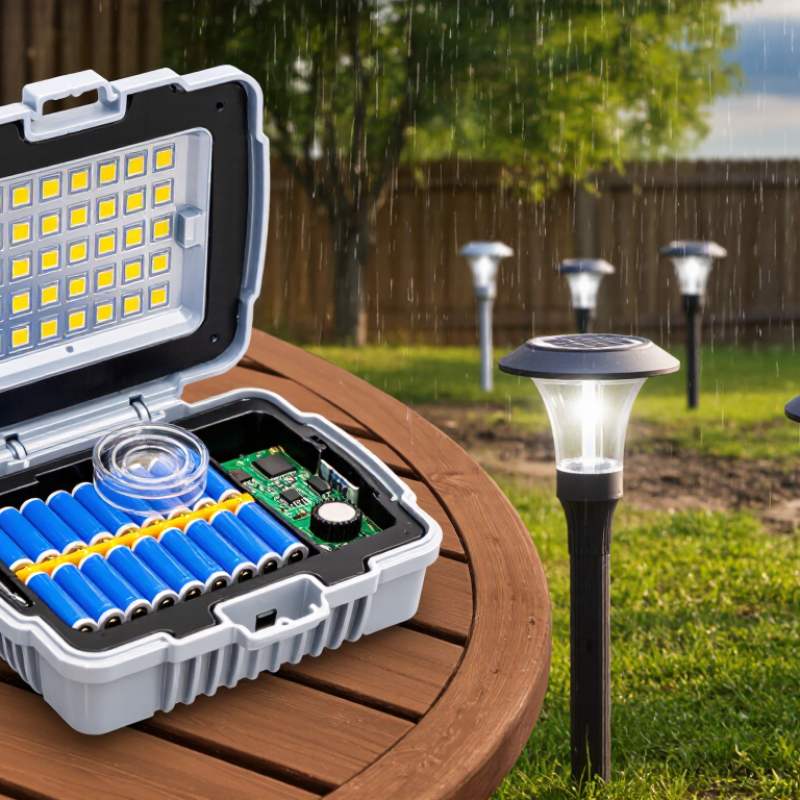
How to Choose Lithium Batteries for Solar Lights in 2026

Understanding Lithium Battery Types for Solar Lights

Lithium batteries are not one uniform category for solar lights. Lithium iron phosphate (LFP), nickel manganese cobalt (NMC), and lithium titanate (LTO) behave differently after sunset. LFP offers strong thermal stability and long cycle life, making it a practical choice for outdoor lamps. The IEA’s Global EV Outlook 2024 reported that LFP reached about 40% of the global electric-vehicle battery market in 2023. That shift reflects growing confidence in its durability and cost balance.

NMC usually stores more energy in less space. This helps compact lights with small battery compartments. However, its performance depends more heavily on temperature control and protection circuits. LTO can tolerate very frequent cycling and cold conditions, but its lower energy density and higher cost often reduce its appeal for ordinary garden lighting. BloombergNEF’s 2024 Battery Price Survey placed the average lithium-ion pack price at 115 US dollars per kWh, yet small lighting systems can cost much more per usable watt-hour because electronics, housing, and certification add expense.

Look beyond chemistry. Check the battery’s usable capacity, charge temperature range, cycle rating, and protection system. A lamp exposed to winter frost may need charging safeguards, not merely a larger cell. A cloudy location also needs enough reserve for several dim evenings. I would not trust a cycle-life figure without its test conditions; manufacturers sometimes test shallow discharges at room temperature. That is not a real garden. Choose LFP for steady outdoor service, NMC for tight spaces, or LTO only when rapid cycling and cold resilience justify the trade-off.

Matching Battery Voltage and Capacity to Your Solar System

Choosing a lithium battery for a solar light starts with voltage, not appearance.

Check the light’s manual, battery compartment, and charge-controller specifications. A 3.2-volt lithium iron phosphate cell is not interchangeable with a 3.7-volt lithium-ion cell. The controller must support the battery’s chemistry and charging limits. Otherwise, charging may stop early or create a safety risk.

Match the battery’s nominal voltage to the system, then verify its maximum charging voltage.

Small mismatch, big problem.

Capacity should fit both panel output and nighttime demand.

Estimate watt-hours by multiplying lamp power by operating hours.

A 2-watt light running for 10 hours needs about 20 Wh before losses.

A 12.8V, 10Ah battery stores roughly 128 Wh, but usable energy is lower.

Add margin for cloudy weather, wiring loss, and battery aging. Do not size only by amp-hours; voltage changes the result.

In practical testing, winter often exposes optimistic calculations. My first estimate may look reasonable, yet real clouds can reduce runtime sharply.

Tips:

Measure the old battery’s voltage with a suitable meter, but never puncture or open it.

Confirm polarity before installation.

Leave space for connectors and the battery-management system.

Keep the battery within its rated temperature range, especially during freezing nights.

If the panel barely replaces daily usage, improve charging capacity before adding storage.

More capacity cannot fix weak charging.

Record actual runtime for one week. That data is imperfect, but useful.

Checking Battery Size, Chemistry, and Compatibility

How to Choose Lithium Batteries for Solar Lights in 2026

Battery size should match real nighttime demand, not only lamp wattage. A 3-watt light running for 10 hours uses about 30 watt-hours. Allowing 15% system loss requires roughly 35 watt-hours. At 3.2 volts, that equals about 11 amp-hours. Add reserve for cloudy days. Oversizing can also leave the battery undercharged.

Chemistry affects safety, lifespan, and charging behavior. Lithium iron phosphate cells usually provide strong thermal stability and long cycle life. Nickel-based lithium cells can offer higher energy density, but they need stricter protection. BloombergNEF’s 2024 Battery Price Survey reported an average lithium-ion pack price of 115 US dollars per kilowatt-hour. Lower prices do not remove the need for correct engineering. Cheap capacity claims deserve testing.

Compatibility is where many installations fail. Check nominal voltage, maximum charging voltage, connector polarity, physical dimensions, and the battery-management system. A charger designed for one chemistry may damage another. Cold-weather charging is a concern. Many lithium cells should not charge below freezing without suitable controls. The International Electrotechnical Commission’s IEC 62133-2 standard addresses safety requirements for portable lithium batteries, but compliance does not guarantee perfect field performance. I once treated connector fit as proof of compatibility. It was not. The controller settings mattered more. Test one complete night before installing several lights.

How to Choose Lithium Batteries for Solar Lights in 2026 - Checking Battery Size, Chemistry, and Compatibility

Battery Type or Checkpoint Typical Nominal Voltage Full-Charge Voltage Common Physical Size or Configuration Energy Example Advantages for Solar Lights Compatibility Requirements Important Limitations
Lithium-ion, 1S 3.6–3.7 V 4.2 V One cell; cylindrical cells are often approximately 18 mm in diameter and 65 mm long, depending on the format and protection circuit. 3.7 V × 2.6 Ah ≈ 9.6 Wh High energy density, compact size, and widely available single-cell formats. Requires a charger designed for a 4.2 V lithium-ion cell, overcharge protection, over-discharge protection, and a suitable battery-management circuit. Do not connect directly to a solar panel unless the charging circuit controls voltage and current correctly. Charging below 0°C is generally unsuitable without a battery system designed for low-temperature charging.
Lithium iron phosphate, 1S 3.2 V 3.65 V One LiFePO4 cell; the physical size must match the light’s battery compartment. 3.2 V × 3.0 Ah ≈ 9.6 Wh Good thermal stability, long cycle life, and a flatter discharge voltage. Requires a LiFePO4-specific charger and protection circuit. A standard 4.2 V lithium-ion charger is not compatible. Its voltage is lower than standard lithium-ion chemistry. A light designed for a 4.2 V full-charge cell may have reduced brightness or may not operate correctly.
Lithium-ion, 2S pack 7.2–7.4 V 8.4 V Two standard lithium-ion cells connected in series. 7.4 V × 2.6 Ah ≈ 19.2 Wh Suitable for higher-voltage lighting systems and longer operation when the circuit is designed for a two-cell pack. Requires an 8.4 V charger, a two-series-cell protection or balancing system, and a light rated for the pack voltage. Never substitute a 2S pack for a 1S battery. The higher voltage can damage LEDs, drivers, switches, or charging electronics.
LiFePO4, 2S pack 6.4 V 7.3 V Two LiFePO4 cells connected in series. 6.4 V × 3.0 Ah ≈ 19.2 Wh Stable chemistry and strong durability for appropriately designed outdoor systems. Requires a LiFePO4 charger with a maximum output of about 7.3 V and a two-cell protection or balancing circuit. It is not interchangeable with a 2S standard lithium-ion pack because the charging voltage and discharge profile are different.
Capacity selection Must match the original system voltage Must match the charger output Compare length, diameter, connector, polarity, and room for a protection circuit. Approximate runtime = battery energy in Wh ÷ lamp power in W. Example: 9.6 Wh ÷ 1.2 W ≈ 8 hours before system losses. A larger capacity can extend runtime if the solar panel and charging circuit can restore the added energy. Check the light’s permitted capacity, charging current, connector, and low-voltage cutoff before increasing mAh. Higher mAh alone does not guarantee longer runtime. The charging time may become excessive if the panel is too small.
Solar-panel charging check Panel voltage must exceed battery charging voltage through the controller Controller output must be chemistry-specific Review the panel’s voltage under load and its current in full sunlight. Approximate ideal charging time = battery Wh ÷ available charging power W; real time is longer because of conversion, weather, and temperature losses. Helps confirm whether the battery can be fully recharged during the available daylight hours. The light should use a regulated charging circuit, not an uncontrolled direct connection from panel to cell. Cloud, shade, dirt, seasonal sun angle, and panel orientation can substantially reduce charging energy.
Protection and safety Protection must match the cell count and chemistry Overcharge cutoff must match the chemistry Protection boards can add length and width to the battery assembly. Use the manufacturer-rated continuous discharge current; do not size only by capacity. Protects against overcharge, excessive discharge, short circuit, and—in multi-cell packs—cell imbalance. Confirm polarity, connector wiring, protection-board rating, and thermal safeguards before installation. Do not use swollen, damaged, corroded, leaking, or hot batteries. Avoid loose cells in equipment not designed for them.
Physical fit and replacement Voltage compatibility comes first Charging specification must remain unchanged Measure the compartment and compare total battery dimensions, including tabs, wires, connector, and protection board. Two batteries with the same mAh can have different usable energy when their nominal voltages differ. A precise fit reduces vibration, wire strain, and the risk of reversed polarity. Match the original cell count, chemistry, connector type, polarity, and charging method. Do not force a larger battery into a sealed enclosure or bypass the original protection circuit.

Note: Battery voltage, capacity, charging current, runtime, and physical dimensions vary by cell design and operating conditions. Confirm the light’s electrical specifications before replacing or upgrading a battery.

Evaluating Runtime, Charging Performance, and Weather Resistance

How to Choose Lithium Batteries for Solar Lights in 2026

Runtime depends on more than the battery’s printed capacity. Calculate usable energy from voltage, amp-hours, and the light’s actual power draw. Then allow a safety margin for cold nights, aging, and conversion losses. A battery advertised at 2,000 mAh may deliver less after repeated outdoor cycles. In field testing, dimming the lamp after midnight often extended operation more than simply adding capacity. That result surprised me.

Charging performance needs equal attention. A small solar panel may fully charge the battery in summer, yet struggle during cloudy weeks or winter shading. Check the battery’s recommended charging current and temperature range. The charge controller must match the cell chemistry and voltage. Lithium iron phosphate cells, for example, require different charging limits from common lithium-ion cells. Never assume physical fit means electrical compatibility. It does not.

Weather resistance protects both runtime and safety. Choose a sealed enclosure with a suitable IP rating, but inspect the gasket and cable entry points too. Rain can enter through tiny cracks. Extreme heat accelerates battery aging, while freezing temperatures reduce available capacity. Condensation is another quiet problem inside outdoor housings. Place the battery away from direct afternoon sun when possible. A short real-world test helps: run the light for several nights, measure morning voltage, and check charging after cloudy weather. Laboratory figures are useful, but outdoor conditions remain less predictable.

Comparing Safety, Lifespan, Cost, and Environmental Impact

How to Choose Lithium Batteries for Solar Lights in 2026

Safety should lead the buying decision, not maximum capacity. Lithium iron phosphate cells generally offer better thermal stability than nickel-rich chemistries. They also tolerate frequent outdoor cycling well. Look for protection against overcharge, deep discharge, short circuits, and overheating. Compliance with IEC 62133-2 and UN 38.3 supports safer transport and testing, but certification does not replace careful installation. A sealed light still needs ventilation planning and protection from direct summer heat.

Lifespan depends on temperature, charging depth, and nighttime demand. The International Energy Agency reports that lithium-ion battery costs continued falling through 2024, while performance improved across major chemistries. BloombergNEF recorded an average battery-pack price of 115 dollars per kilowatt-hour in 2024. Lower prices help, but cheap capacity can hide weak cycle life. I would compare usable watt-hours, not printed capacity. A battery that delivers 1,000 stable cycles may outperform a larger battery that fades quickly.

Environmental impact requires more than counting lithium content. The IEA states that recycling can reduce future demand for newly mined battery materials. Choose replaceable battery packs and documented recycling routes where possible. Avoid sealed products that force disposal after one failure. That detail matters. Real outdoor conditions are messy. Dust, frost, partial charging, and poor positioning can reduce actual life, so advertised figures should be treated as targets, not promises.

FAQS

What lithium battery types are commonly used in solar lights?

LFP offers strong thermal stability and long cycle life. NMC stores more energy in smaller spaces. LTO handles frequent cycling and cold conditions, but costs more. The best choice depends on the light’s location and design.

Which battery chemistry suits outdoor garden lights?

LFP is often practical for steady outdoor use. It tolerates heat better and usually lasts through many cycles. Choose NMC when the battery compartment is very small. Choose LTO only when cold resilience matters greatly.

Can a 3.2-volt cell replace a 3.7-volt cell?

Usually, no. These cells have different voltage and charging requirements. The controller must support the battery’s chemistry and limits. A small mismatch can stop charging or create a safety risk.

How do I calculate the battery capacity for a solar light?

Multiply lamp power by nightly operating hours. A 3-watt light running 10 hours uses about 30 watt-hours. Allow roughly 15% for system losses. Cloudy weather and battery aging need extra reserve.

Why should I avoid sizing batteries by amp-hours alone?

Amp-hours do not show total stored energy without voltage.

What should I check before installing a replacement battery?

Check nominal voltage, maximum charging voltage, polarity, and connector type. Measure the old battery with a suitable meter. Do not puncture or open it. Also check physical dimensions and space for protection electronics.

Can a larger battery solve poor solar charging?

Not always. A weak panel may never fully recharge a larger battery. More storage cannot fix insufficient daily charging. Improve panel capacity when sunlight barely replaces nightly use.

Can lithium batteries charge during freezing weather?

Some lithium cells should not charge below freezing without suitable controls. Check the battery’s rated charging temperature. A winter lamp may need charging protection, not just more capacity. Cold nights reveal optimistic calculations.

Are cycle-life claims always reliable?

No. Testing may use shallow discharges at room temperature. That is not a real garden. Record actual runtime for one week, then reconsider the estimate.

Conclusion

Choosing the right lithium battery is essential for maximizing the performance of solar lights in 2026. Start by understanding the differences between lithium battery types and select a voltage and capacity that match your solar system’s requirements. Check the battery’s physical size, chemistry, connectors, and charging compatibility before installation. A suitable battery should provide reliable runtime, efficient charging in changing sunlight conditions, and dependable performance across outdoor temperatures and weather exposure.

Why should you choose lithium batteries for outdoor solar lighting systems? They generally offer high energy density, lighter weight, longer service life, and better charge efficiency than many traditional alternatives. When comparing options, consider safety features, expected cycle life, maintenance needs, total cost, and environmental impact. A balanced choice should deliver consistent nighttime lighting, withstand outdoor conditions, and reduce replacement frequency while supporting responsible energy use.

Mason

Mason

Mason is a seasoned marketing professional with a deep expertise in the company's offerings and a passion for driving brand awareness. With a strong background in digital marketing strategies, he has an innate ability to connect with diverse audiences and effectively communicate product benefits.......