Soweglow Solar
Strategic Technical Paper: Adapting Solar LED Infrastructure for the Uzbekistan Energy Shift
Uzbekistan is aggressively pivoting toward solar integration. Backed by government initiatives to phase out inefficient grid networks, municipal planners and commercial developers are demanding autonomous outdoor illumination systems. However, installing standard solar lamps in this region without engineering adaptations is a recipe for premature system failure.
1. Battery Thermal Management Under Central Asian Extremes
Unlike tropical regions, Central Asia experiences seasonal variance exceeding 65°C. At temperatures surpassing 45°C in regions like Bukhara, standard lithium batteries face significant thermal degradation, decreasing battery life by up to 60%. Conversely, winter temperatures sinking to -20°C cause standard lithium-ion cells to lose capacity or fail to charge altogether.
Our factories mitigate this hazard by deploying advanced Lithium Iron Phosphate (LiFePO4) batteries integrated with proprietary Battery Management Systems (BMS). The BMS dynamically adjusts charging rates according to internal temperature sensors, incorporating high-temp disconnects and heating elements inside low-temperature enclosures to maintain high efficiency and safe operations.
2. Photovoltaic Efficiency Optimization in High-Dust Zones
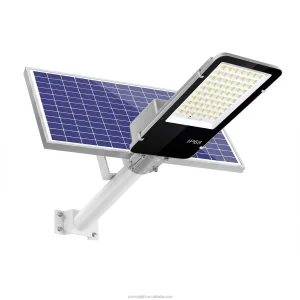
Dust deposition (soiling) is a major contributor to output degradation in regional solar systems. Sandstorms and dry atmospheric dust settle on solar modules, creating shade barriers that trigger hot-spot effects. By utilizing monocrystalline panels with specialized anti-reflective, anti-static nano-coatings, we ensure rainwater easily clears away loose dust particles.