Soweglow Solar
1. Landscape of Thailand's Commercial & Industrial Solar Street Lighting
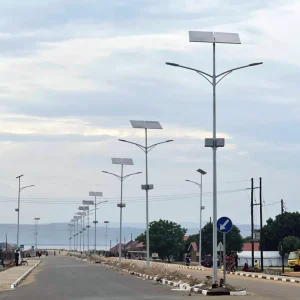
Thailand's commitment to transitioning towards a low-carbon society under the "Thailand Energy 4.0" initiative has catalyzed an unprecedented surge in utility-scale and municipal solar deployments. As a regional manufacturing powerhouse, the Kingdom has experienced rapid urbanization, especially across the Eastern Economic Corridor (EEC) zones including Chonburi, Rayong, and Chachoengsao. Public-private infrastructure expansion has created a demanding requirement for cost-efficient, highly durable municipal lighting infrastructure. Traditional high-pressure sodium and grid-tied systems are increasingly replaced by smart-controlled solar street lighting systems.
However, the geographical and climatic profiles of Southeast Asia—particularly Thailand—demand customized engineering considerations. Solar street lights deployed in Thailand face severe environmental strains: high humidity indexes (regularly exceeding 85%), prolonged monsoon cycles with dense cloud coverage, intense UV exposure, and highly corrosive sea breeze along extensive coastal areas like Phuket, Pattaya, and Surat Thani. Consequently, generic off-the-shelf lighting configurations fail rapidly due to battery degradation, water ingress, and low solar conversion rates. Successful infrastructure developers require specialized manufacturers capable of delivering tropicalized, industrial-grade engineering solutions.
2. Addressing Engineering Challenges in Tropical Climatic Zones
Procuring solar street lights in Thailand involves mitigating two main environmental threats: high thermal environments and water ingress during monsoonal storm events. Standard lithium-ion batteries degrade rapidly if exposed to temperatures above 45°C, which is common inside sealed solar enclosures mounted under direct sunlight in central and northern Thailand. This requires the use of specialized Lithium Iron Phosphate (LiFePO4) battery cells coupled with advanced Thermal Management Systems (TMS) to prevent thermal runaway and maintain lifecycle performance exceeding 3,000 cycles.
Critical Design Standard: IP68 Protection vs. Heavy Monsoonal Flooding
In regions such as Ayutthaya, Samut Prakan, and Bangkok, which are prone to seasonal flooding, standard IP65 ratings are insufficient. For industrial projects, we supply custom-engineered street lights featuring IP68 double-cavity waterproofing. The controller compartment is isolated from the battery compartment, protecting critical electronic components from ambient humidity and direct heavy rains.
Furthermore, standard solar panels lose efficiency when temperatures rise (negative temperature coefficient). Premium monocrystalline panels deployed in the Thai market must feature low-temperature coefficient ratings and be configured with high-performance MPPT (Maximum Power Point Tracking) controllers capable of optimizing energy harvest during cloudy monsoon seasons, when diffuse daylight dominates.
170lm/W
Luminous Efficacy
LiFePO4
High-Temp Batteries
MPPT
99.8% Tracking Efficiency
TISI & CE
Regulatory Compliance
3. Procurement Standardizations for Global Developers & Local EPCs
International engineering procurement contractors (EPCs) and local Thai municipal agencies need to establish strict benchmarking criteria when vetting Chinese and local manufacturers. Sourcing decisions cannot rely purely on upfront cost (CAPEX); they must consider total cost of ownership (TCO) and operational lifetime (OPEX). Below is an overview of the key components that define a reliable commercial solar lighting solution:
Component Reliability Matrix for Thailand Projects
Each component within the lighting assembly represents a potential failure point under tropical stress conditions. Experienced buyers must enforce standard specifications to prevent system downtime:
- Monocrystalline PV Module: Efficiency above 21.5%, featuring anti-reflective, high-transmission tempered glass, designed to withstand wind loads up to 2.4 kPa.
- Battery Pack: Internally mounted LiFePO4 cells, protected by a dedicated battery management system (BMS) with high/low temperature cut-off parameters.
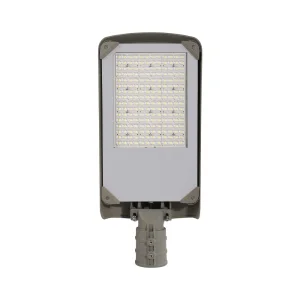
- LED Light Engine: Powered by Lumileds or Bridgelux chips, achieving system efficacy of up to 170 lm/W with a service life exceeding 100,000 hours (L70).
- Enclosure & Housing: Heavy-duty ADC12 die-cast aluminum with anti-UV powder coating to resist coastal salt spray and high relative humidity.
Macro Environmental Performance Summary
To qualify for major Department of Highways (DOH) or Department of Rural Roads (DRR) tenders in Thailand, products must achieve:
• Surge Protection: Up to 10kV/20kV integrated SPD to prevent lightning damage during tropical thunderstorms.
• Wind Resistance: Mechanical certification to withstand typhoons and wind speeds up to 60 m/s.
• Smart Dimming Protocols: Pre-programmed profiles (e.g., 2 hours at 100%, 3 hours at 70%, then dimmed to 30% with motion sensor activation) to extend autonomy up to 5-7 continuous rainy days.
4. Smart City Integration & IoT Roadway Management
As Thailand rolls out Smart City initiatives across Samut Prakan, Chiang Mai, and Phuket, solar lighting has evolved from standalone fixtures into interconnected smart city endpoints. Our smart solar street lights can be configured with communication modules utilizing LoRaWAN, Zigbee, or 4G LTE cellular networks. This integration permits municipal maintenance departments to monitor real-time battery status, track power consumption, adjust dimming profiles remotely, and receive instant alerts for diagnostic events (such as LED chip failures or low battery capacity).
Additionally, solar-CCTV integrations serve a double purpose in urban zoning. High-efficiency solar panels power high-definition security cameras continuously, creating off-grid surveillance solutions that require zero excavation or trenching for power lines. This provides a cost-effective security option for highways, industrial yards, and remote rural communities throughout Thailand.
5. Local Compliance, TISI Standards, & Grid Interconnection
Deploying solar energy products in Thailand requires compliance with local standards. The Thai Industrial Standards Institute (TISI) regulates electrical and safety parameters for lighting equipment and lithium battery packs. Manufacturers must provide test reports verifying compliance with IEC 60598-2-3 (road and street lighting safety) and IEC 62133 (secondary cell safety).
For projects involving grid-interactive solar lights or hybrid systems (which switch to AC grid power during extended rain spells), compliance with the Provincial Electricity Authority (PEA) and Metropolitan Electricity Authority (MEA) connection codes is essential. Working with a manufacturer that provides verified test certifications avoids customs clearance issues and helps secure approvals from Thai building control departments.